Tuesday, November 15, 2011

Top 10 List Of Exotic Pets

Sugar glider
These popular little marsupials from northeast Australia weigh no more than about five ounces. Their lively and curious nature helps them to bond easily with humans. Unfortunately, they’re also social and nocturnal, and want your attention when you can’t give it — at night. For that reason, it is recommended that you keep at least two.
Owners should also provide an environment with branches or vines to satisfy the sugar glider’s desire to climb. Additionally, their diet is a subject of some controversy among vets and nutritionists. The only agreement between these parties is that the diet should include protein, insects and various vitamins and minerals.
Pet peeve: When gliders eat, they suck what they need from the food and spit out the rest. As a result, bits of crescent-shaped gunk pile up on the floor around the cage and stick to the walls.

Kinkajou
This nocturnal rainforest mammal is friendly and affectionate by nature and, therefore, enjoys some popularity among exotic-pet owners.
Despite their sharp, carnivorous teeth they eat bananas, eggs, mangoes, Fruit Loops, marshmallows, and gummi bears. This preserves their wicked, bacteria-loaded bite for when threatened or scared. If you harbor doubts, just ask Paris Hilton: Her kinkajou sunk its teeth into her arm and sent her to the ER.
Pet peeve: The kinkajou’s nocturnal chattiness has been known as la llorona for centuries. If your Spanish is rusty, it means ”the crying woman.” Need I say more?

Squirrel monkey
Hailing from Central and South America, the squirrel monkey is omnivorous, preferring to eat fruits, nuts, bird eggs, and small vertebrates. Measuring in at about 2.75 pounds, they have a number of predators, which is one reason they run with a posse that can number as high as 500.
Speaking proportionately, they have the largest brain of all the primates (that includes humans). Couple that intelligence with a social and affectionate nature, and things like house-training come relatively easy to this monkey.
Pet peeve: Any method of marking territory that a pet has is bound to be a peeve, but when the squirrel monkey does it, he rubs his tail and skin into the urine. As a result, he’ll mark any place he goes next, like your lap.

Bengal cat
No relation to the Bengal tiger, the Bengal cat is a hybrid creation featuring pre-designed genetic characteristics that are crossbred with the likes of something more exotic, such as the Asian leopard cat. The result is a new feline breed that acts much like a mellow domestic, but looks like he just walked off the Savannah plains. Variations include the Serengeti, the toyger, and the cheetoh. The more pure-bred the cat, the more costly; one sold for $42,000 in 1998.
Although some consider the Bengal cat’s disposition more like a dog, and thus, more of a man’s pet, I can’t help but detect a woman’s hand behind this breed; it’s like the feline equivalent of the sensitive, domesticated boyfriend dressed up like a dangerous bad boy.

Pet peeve: There are no complaints beyond the typical ones associated with cats, such as watching your nice furniture shredded to bits by claws.

Ball python
There are two types of people: those who like snakes as pets and those who don’t. It’s doubtful that the red eyes or exotic colors of some of these rare variations will entice the uninterested. After all, ownership in this case means keeping your 5-foot-long ball python in a 30 gallon tank and feeding it dead mice, rats or gerbils every 10 days for the next 30 years.

Pet peeve: Your $40,000 lavender albino ball python has refused to eat. Out of options, you take the breeder’s advice and scalp a dead rat, since seeing the brains of his prey might be enough to entice him to eat.

Mona monkey
This West African native is an Old World monkey who peaks out at about 15 pounds and lives into his early 20s.
Like any monkey, he needs to move those crazy limbs. Owners should provide them with an enclosure that permits climbing, swinging, goofing around, and even hiding. His diet is fairly basic, consisting of pumpkin and sunflower seeds, fruits, and insects. The most difficult job may be monkey-proofing your home, since he can outsmart or out-jiggle most baby-proof methods.

Pet peeve: Enjoy his broad range of vocalizations, which include a loud, expressive lament, a danger alert that sounds like a sneeze, and a territorial boom and hack

Hyacinth macaw
The hyacinth macaw can’t dance, roller-skate or ride a unicycle like Big Bird, but he’s still big. The hyacinth macaw weighs in at four pounds, and the world’s largest parrot species also enjoys a tremendous four-foot wingspan. Not only that, but his beak is so strong that it bends the bars of most cages without much effort.
This South American native mates for life, is easily domesticated and will probably outlive you. In the wild, he eats the nuts from two kinds of palm trees, but one of them, the acuri,
he only eats after it has passed through the digestive system of another animal.

Pet peeve: How long will it take before harvesting the recycled acuri nut gets old?

Reticulated python
Hailing largely from Thailand and Indonesia, reticulated pythons represent the longest known species of snake in the animal kingdom. And just how do you keep this monster happy?
Start with a fairly large tank for a habitat in which humidity levels and high temperatures must be regulated with some discipline. Adults don’t need to eat very often, only every 10 to 14 days, and when they do, they prefer dead guinea pigs, rabbits and big rats.

Pet peeve: Breeders recommend getting a second person to help you feed your reticulated albino type II tiger python; someone needs to call an ambulance when it mistakes you for a carcass.

White Lion
According to Forbes, as a pet this cub is the world’s costliest animal.
The white lion is not a species unto itself; he’s your standard lion with a potentially fatal flaw. The flaw is a recessive gene that alerts both potential prey (wildebeests, hippos and adult elephants) as well as predators (hunters) to his presence.
The problem with raising a cub is the same as raising some puppies — they grow up. In the case of a white lion, that can mean reaching 500 pounds.

Pet peeve: Some lions are more prolific man-eaters than Jeffrey Dahmer.

Chimpanzee
Eerily analogous to humans in life span, behavior and even DNA (we share 94%), chimps have a hold on human fascination and attract the likes of scientists, zoo-goers and potential pet owners. This remarkable similarity also hints toward why they make for such problematic and unmanageable pets.
A chimp can be house-trained, but he’s intelligent enough to have a mind of his own. If he wants to raid the fridge, but fails to outwit you, his 115-pound frame has another option — take it by force.
His average upper-body strength is five times that of a human. With a more sophisticated gripping capacity he could show you up at the gym, but why bother? He can just maul you to death.
Pet peeve: You’re showing him off to friends. Then for whatever reason, he appears smarter than you, and your friends laugh. The chimp vocalizes — who knows why — and it sounds like he’s laughing too.

Article courtesy of artsonearth.com


Grab The Bookmarketer For Your Site

Tuesday, November 8, 2011

Virtual Pets - Why Are Virtual Pets So Popular?

By Victor C.


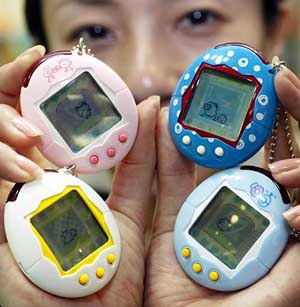
Virtual pets, also known as a digital pet, are popular all over the world today. Many will say you can trace the virtual pets origin back to the 1970's and the "Pet Rock". The Pet Rock was an ingenious marketing idea. The idea originated in southern California but quickly spread across the United States. The Pet Rock fad only lasted around six months but it laid the ground work for many new ideas in the future.

Virtual Pets were built on the age old idea that you do not need a real live pet to have fun. You can create an emotional connection with an inanimate object. Today Virtual Pets have grown into much more than a passing fad. Virtual Pets have morphed into both physical robots and toys, to strictly digital in manner.

They are enjoyed by millions of people all over the world. VP's (Virtual Pets) are popular with both the young and the old. They have become extremely popular in the big Cities of the world. People in big cities do not have the room to raise a real pet. The Virtual Pet gives them the opportunity to feel the same emotional connection they would with a normal pet. VP's have to be cared for. You have to feed them and give them water; they must be walked and loved. If you do not take care of your Virtual Pet it could die.

There are different kinds of digital pets. A few of the different types are:

o Digital Pets: these are the most prominent. A computer or digital device is used to interact with the virtual pet. More often than not the pet is interacted with in a virtual world that exists in the computer or on the Internet. Games or puzzles are often played to allow the owner to earn money to buy food and care items for their pet. The pet can be bred with other owner's pets and can have offspring. You are limited only by your imagination. These virtual worlds come and go making it difficult to keep an accurate count of how many there are. They are numerous on the internet. Digital pets do come in different types.

Some of these are:

o The online Internet Virtual Pet.

o The desktop digital pet; requires software be installed on your computer.

o The digital device Virtual Pet such as the Palm pilot pet.

o Physical Virtual Pet: these come in several varieties. There are robot dogs, fish aquariums, small plastic pets and therapeutic pets for the sick and elderly.

o MP3 Digital Pets: there are different types here as well. Some of these have morphed over into the cell phone.

These are just some of the many different types of Virtual Pets you will find available for your enjoyment

today.

When you tire of your digital pet you can think about creating your own alter ego in a digital person. Virtual people have also been created today. You can now create a digital avatar that looks somewhat like you, and lives in a "Virtual World". Your digital clone can have a digital family and a virtual pet. You can live and interact in huge digital cities and worlds. You can get lost in this fantasy land for days on end. It truly is amazing and great fun. It has taken the idea of the Virtual Pet to the next level.

Whether you decide for a physical Virtual Pet or a digital one you will have hours and hours of fun playing and caring for your pet. So let your imagination run wild. Get your digital pet today.

Victor C. is an Engineer in Computer Systems who loves to read and write about any subject, as long as it's interesting and useful for the reader.

He is specially interested in Health, Flirting and Babies And Animals

Watch Funny Pets Videos At: Funny Pets Video Collection [http://www.petvideosworld.com]

Article Source: http://EzineArticles.com/?expert=Victor_C.


Grab The Bookmarketer For Your Site

Tuesday, November 1, 2011

Pet Parties - The Latest Craze

By Marion Algier


As the baby-boomers are taking the lead, in ever-growing numbers, as pet owners, so is pet spoiling and the 'special pet events' phenomenon. Baby-boomers, who are primarily empty-nesters are replacing their grown children with pets and spoiling those pets as they used to spoil their children.

Pet parties are one of the newest crazes; birthday and holiday parties with and for pets. They include activities and goodies for both the pets and their humans. Pet 'birthday' parties top the list, especially for dogs and then cat parties rank as a distant second. They vary from a group of pet owners and their pets going to lunch or dinner at a pet friendly restaurant to parties at the park or backyard house events. Pet-care facilities (doggy daycare sites and pet hotels) are another option to consider if you don't have room for a home party.

As with Halloween... with pet 'dress-up events' or just having your pet at a conventional gathering or party, there are lots of factors to consider. Will the pets on the guest list get along? Are your human guests pet focused enough and willing to keep an eye on their pet as well as maintain a pet positive environment at the party for everyone, while still having a good time themselves? And is your pet the type who likes being around other animals and groups of people, or is this party really for you?

There are many restaurants that are pet friendly these days so will cordon off an area, as they do for kiddy parties, for your pet event; some even supply decorations and goodies.

But if you prefer to do it yourself and go all out, here are a few suggestions:

Indoor Party Activities:

o Pick a fun theme. Party favors and decorations are now available for most types of pet parties.

o Have each doggy (kitty, bird, monkey, pot bellied pig, etc) guest come in costume and have a mini-fashion show or have your guests and their humans come in matching costumes! Give prizes for best costume(s), funniest, most original, etc.

o Bring Kong type toys, one for each doggy guest, filled with cheese or peanut butter; catnip or tuna for the kitties.

o Have plenty of training treats, snacks and biscuits on hand and hold contests for best sit, stay, shake, roll over... (perhaps for most finicky for the felines?).

o Bring a good supply of rope toys for a doggy tug of war! You'll find that sometimes the humans will participate as well.

o Paw mural painting can be done inside or out as long as you cover the floor well.

Outdoor Party Activities:

o A silly pet trick contest is a great event, indoors and out, but outside parties lend themselves to a greater variety of tricks. Give a prize for 1st, 2nd and 3rd or just for first prize and then give a treat to the others for participation.

o If you have mostly the same types (or breeds) of pets or groups that are the same sizes, dog (or piggy and kitty... if you can motivate them) races can be fun. (Dachshund or Chihuahua races are always funny.)

o Bring enough balls so there is at least one ball or Frisbee per doggy guest and play free-for-all fetch or wands with fake birds, small balls or catnip toys tied at the end for the cats.

o Agility equipment events like a tunnel for the dogs to race through is a good addition; make sure you have lots of training bits or other treats to offer them when they run through successfully!

o Water activities like swimming events in the pool for certain dog breeds during the warm season are possible activities to consider, or bobbing for biscuits using a small tub or kiddie pool with water and then tossing in some biscuits. Whoever gets them out the quickest wins!

o Also, if at the park, make sure you consider safety issues like portable fencing or stakes to attach leashes, so the dogs and their humans can relax for awhile.

Food:

o Make sure there is plenty of water - Provide separate bowls for each pet guest (possibly personalized for them to take home) filled with mineral, filtered or even Smart(TM) water.

o Order goodies from the local or online doggy (pet) bakeries and party suppliers, or better yet bake them yourself.

o Have an outdoor bar-b-que and fix a special dinner for both the pet guests and their humans with their own grilled boneless steaks or chicken for the doggies or tuna and salmon for the kitties!

o And of course, you must have a birthday cake! You can make it yourself or order one from a local or online pet bakery. A small slice of carrot cake or really any other cake as long as it doesn't contain chocolate could be served to most pets as well their humans at a special occasion, but in most cases you will probably want a special one for the pets and one for their humans.

o There are also many human goodies (candy and baked goods) shaped like pets, bones, or pet articles that can add fun to the party.

o A goodie bag to take home filled with unique biscuits, doggy ice cream, dehydrated meats (dehydrated fish, a catnip toy, cat grass or grass seeds and gourmet cat desserts for the kitties), and a small pet safe toy, along with their personalized water bowl is a nice touch.

Make sure you label the food appropriately, especially at a buffet-style meal, to ensure that no people accidentally bite into a dog or cat treat or that the pets don't get too many human treats!

Regardless of the style of the party or the range of food served, you will need to consider both the fun of all the party guests as well as the safety of the food you choose for the people and the dogs (cats or birds, etc) at the event. You might want to skip serving chocolate and onions completely, keep alcohol to a minimum and have a special (pet free) smoking area to keep the guest of honor and friends from eating the butts. Discussing allergies and safety matters of the pets, children and adults at the party in advance will prevent any surprises for the day of the party, as well, perhaps as part of the invitation RSVP request.

Kids have will have fun participating in the games and giving out treats to the winners, so include them if you have any children on your guest list. But be sure to consider supervision, and I would recommend limiting the number of children present. If you do have children or grandchildren at home, include them in the preparation and give them jobs and responsibilities at the party.

And finally, make sure you have a way of capturing all this fun on film! A volunteer photographer or videographer is great for memories and someone taking Polaroid's for the costume contest, to send home with guests, is always a great touch!

Future articles will include throwing a 'fancy' doggy party and 'pet' party recipes. But for now, for those of you baking and making the party food on your own, here is a fun recipe for your human guests (and a small sliver, minus the Tootsie Rolls, won't hurt the pets either):

Famous kitty litter cake

(Several variations of this recipe can be found online)

Ingredients:

1 spice or German chocolate cake mix

1 white cake mix

2 large packages vanilla instant pudding mix, prepared

1 large package vanilla sandwich cookies

green food coloring

12 small Tootsie Rolls

1 new kitty litter pan

1 new plastic kitty litter pan liner

1 new pooper scooper

Directions:

Prepare cake mixes (or scratch cake) and bake according to directions (any size pans).

Prepare pudding mix and chill until ready to assemble.

Crumble white sandwich cookies in small batches in food processor, scraping often. Set aside all but about 1/4 cup. To the 1/4 cup cookie crumbs, add a few drops green food coloring and mix until completely colored.

When cakes are cooled to room temperature, crumble into a large bowl. Toss with half the remaining white cookie crumbs and the chilled pudding. Important: mix in just enough of the pudding to moisten it. You don't want it too soggy. Combine gently.

Line a new, clean kitty litter box. Put the cake/pudding/cookie mixture into the litter box.

Put three unwrapped Tootsie rolls in a microwave safe dish and heat until soft and pliable. Shape ends so they are no longer blunt, curving slightly. Repeat with 3 more Tootsie rolls bury them in the mixture. Sprinkle the other half of cookie crumbs over top. Scatter the green cookie crumbs lightly on top of everything -- this is supposed to look like the chlorophyll in kitty litter.

Heat 3 Tootsie Rolls in the microwave until almost melted. Scrape them on top of the cake; sprinkle with cookie crumbs. Spread remaining Tootsie Rolls over the top; take one and heat until pliable, hang it over the side of the kitty litter box, sprinkling it lightly with cookie crumbs. Place the box on a newspaper and sprinkle a few of the cookie crumbs around for a truly disgusting effect!

Have a great party!

Marion maintains Just One More Pet at http://justonemorepet.wordpress.com dedicated to stopping unnecessary pet Euthenization and animal abuse through awareness.


Article Source: http://EzineArticles.com/?expert=Marion_Algier


Grab The Bookmarketer For Your Site

Tuesday, October 25, 2011

11 Silly Halloween Costumes for Pets

As though your dog or cat isn’t cute enough already, just picture it in a Halloween costume…

Casual Canine Taco Costume
No need to worry about the fixings: This all-in-one soft tortilla shell comes “stuffed” with peppers, tomatoes, and lettuce.

To buy: From $8.25, petedge.com.

Cowboy Cat Costume
Get ready for the rodeo with a red bandana scarf and cowboy (or cowgirl) hat. Yee-haw!

To buy: $7, petsmart.com.

Jockey Costume
All bets are on this Derby-inspired getup. Bonus points to the owner who sports a fancy hat.

To buy: $8, walmart.com.

Prince Lionheart Hoodie
For the pride of your household: Dress your pup as the king of the jungle and hear him roar (or, you know, bark).

To buy: $32, trixieandpeanut.com.

Ladybug Costume
Spot on when it comes to cuteness. The purr-fect costume for a cat who enjoys getting a bit of attention.

To buy: $28, thesophisticatedcat.com.

Costume Couture by Simon Doonan—Spaghetti and Meatballs
Simon Doonan’s Target-exclusive costume, with its jaunty spaghetti-and-meatballs hat, is made for the pet who’s got food on its mind.

To buy: $10, target.com.

Dragon Hoodie Dog Costume

How to train a (furry) dragon? Suit him up in a sweatshirt-style outfit with a hood that snaps down.
To buy: $32, barkerandmeowsky.com.

Frog
Yes, outside he’s a frog. But inside? A prince (in plush polyester).

To buy: Unfortunately, this item is no longer available, but find other options here: oldnavy.com.

Mouse Hat Cat Costume
In an interesting cat-in-the-hat twist, Mr. Mittens can do a bit of role reversal.

To buy: Unfortunately, this item is no longer available, but find other options here: petsmart.com.

Casual Canine Elephant Costume
Going trick-or-treating? Bring along a trunk—in the form of an elephant outfit.

To buy: From $12, ppepets.com.


What is this?
RETURN OF THE DINOSAUR GUINEA PIG!
now in a variety of colours!


Each are $14 from cuddlycavies.homestead.com


Written by By Krissy Tiglias for realsimple.com


Grab The Bookmarketer For Your Site
Tuesday, October 18, 2011

Homemade Pet Food - The Latest Animal Dietary Trend

By John Darby


Pet owners in the United States and in some other countries began to seriously worry about the safety of pet food in the Spring of 2007. Pet food was found to be contaminated on what can only be called a massive scale. Pet owners in many different locations were faced with very sick pets -- even with pets that ended up dying.

As a result, the move towards preparing and creating homemade pet food became even stronger. In fact, over the course of the past fifteen years, a growing number of people have taken to making their own pet food for their companion animals. There are a number of stellar benefits associated with creating homemade pet food for your pets.

Wholesomeness and Safety

Of course, as has been mentioned previously, many people have become concerned about the safety of commercially made pet food. And, as has also been mentioned, this has driven more and more pet owners towards making their own food for their companion animals. Thus, one of the most obvious and most significant benefits associated with homemade pet food is the fact that you can be assured of its safety and wholesomeness. Because you are making the food, you know what has gong into it. You will not be worrying that you are taking some sort of crap shot by purchasing pet food off the shelf at the market or pet store.

Nutrition and Homemade Pet Food

When all is said and one, nutrition is the second most important consideration in regard to pet food after the safety issue. When you obtain food your pet, one of your primary concerns needs to be the nutritional content.

The problem is trying to dig through all of the claims and counterclaims associated with commercially produced pet food. It becomes very hard to determine what fact is and what fiction is when it comes to commercially made pet food.

By making your pet's food directly, you know precisely the nutritional content that is in the food. You have 100% control over what goes in and what stays out of your pet's food items.

Saving Money with Homemade Pet Food

Many people have found that maintaining their pets can be an expensive proposition. Because pet owners overall have become more astute about what their pets should eat, many pet owners are investing more money in commercial pet food products. In truth, this really can become more expensive.

By making your pet's own food, you really have the ability to prepare high quality food for your pet and not pay high prices for those meals.

Homemade Pet Food -- Variety for Your Companion Animal

Pets have a number of things in common with people. For example, most pets like at least some variety when it comes to their food. By making your pet's own food, you have the ability to provide you friend with choice, change and variety when it comes to its menu.

Creating Homemade Pet Food can be Enjoyable

Many people have found preparing pet food to be an enjoyable task -- particularly people who have a penchant for cooking and baking. If you are such a person, odds are strong that you will also enjoy making pet food for your favorite friend.

Conclusion

There are, indeed, many benefits associated with homemade pet food. Through this article, you will have the chance to weigh and balance your options in order to determine whether making pet food for your companion animal is the right choice and the right solution for both you and your friend.

For your animal companion who has become a loyal friend, celebrate your unique friendship with a pet portrait painting! This article brings you a concise description regarding the purpose and the benefits of transforming ordinary pet photos into lasting pet portrait oil painting. At Portrait Kingdom your pet portraits is in better hands.

Article Source: http://EzineArticles.com/?expert=John_Darby


Grab The Bookmarketer For Your Site

Tuesday, October 11, 2011

How To Care For Guinea Pigs


A descendant of the wild guinea pigs of South America, today's domesticated guinea pig is viewed by many as an "easy" pet for children. Many parents select a guinea pig as a first pet for their child, believing a small pet needs only a small amount of care. It is important to understand that these little guys have lots of requirements, including a roomy cage, specialized diet, daily cleanup, and gentle handling, and that an adult should be the primary caretaker.

1. Make Room at the Inn
They may be small, but guinea pigs require ample space to move about. Make sure their living quarters are at least 18 inches wide, 14 inches high, and 25 inches deep. Guinea pigs housed in larger cages are more likely to be active. Do not use aquariums, as they provide poor ventilation, and mesh or wire-floor cages hurt guinea pigs' tender feet.

When choosing floor linings and cage furnishings, keep in mind that guinea pigs will chew on just about anything to wear down their constantly growing teeth, so everything placed in the cage must be nontoxic. Use plenty of lining material—shredded ink-free paper or commercial nesting materials available at pet-supply stores, for example—because guinea pigs will use the material as both bedding and bathroom.

Remember also to provide plenty of high-quality hay, which these rodents use for nesting and snacking. Do not use materials such as sawdust, cedar chips, or fabrics that may cause respiratory or other health problems. Finally, provide your guinea pig with a gnawing log (such as an untreated fruit tree branch), tunnels to crawl through, and platforms to climb on. Add a heavy food bowl resistant to tipping and gnawing and a water bottle with a sipper tube.

2. Get a Little Closer
Guinea pigs are easily stressed, so they require careful handling. To pick up a guinea pig, slowly place one hand under his chest just behind the front legs, and gently cup your other hand under his hindquarters. Once you have a firm but gentle grip on the animal, lift him. Then immediately pull him close to your chest or lap so he feels safe and doesn't thrash around.

3. Give 'Em Their Greens
Feed your guinea pig a commercial guinea pig food, formulated especially for the species. These herbivores require a lot of vitamin C, so provide veggies such as kale and cabbage and ask your veterinarian about vitamin supplements. Treat guinea pigs to fruits, including melon slices and apples (but remove the seeds, which are toxic).

4. Help with the Cleanup
Guinea pigs try their best to keep clean, fastidiously grooming themselves with their front teeth, tongue, and back claws. But pigs—particularly the long-haired breeds—require frequent brushing and combing to stay clean and tangle-free.

Also, because their cage lining doubles as bedding and toilet, guinea pigs require daily housekeeping assistance. Scrub and disinfect the cage, then let it dry before lining the floor with fresh bedding and replacing the cage furnishings. Also clean the water bottle and sipper tube daily to prevent buildup of food, algae, and bacteria.

5. Pair Them Off
Guinea pigs are happiest when with other guinea pigs, so many pet care books urge owners to keep two or more together. Choose pairs that are the same sex and compatible. (For example, more than two male pigs together are likely to fight.)

If that hasn't convinced you to get yourself a guinea pig check this out:
RAWR! too cute!


Article courtesy of the Animal Sheltering Magazine,


Grab The Bookmarketer For Your Site

Tuesday, October 4, 2011

Take Better Pet Photos


In Ten Simples Steps
Step 1

Know your camera

The first task that must be undertaken before any other, is knowing your camera inside and out.

Say if for instance you don't know where the zoom button is, you could miss a crucial shot, a picture that would have been perfect and may never arise again.

So look at your camera, read the instruction booklet if need be and take plenty of practice shots.

As you try out every option your camera has and remember those options that you liked and/or you think will come in handy when photographing your pet.

Of course this all assumes you already have your own camera. If not, when purchasing a camera make sure it has everything you're looking for.

You don't need to go overboard with extra features that you will never use.

Most camera places will show you how to use the camera anyway, at least the basics and be sure to ask many questions.

For you don't want a camera that won't do the things you're looking for.

To get a general idea of what you'll need to look for, I suggest you finish the ten steps beforehand and then buy your camera around them.

So now that you've fiddled with your camera or you already knew well before reading this what your camera can do, it's time to test it out.

Photograph everything that you find interesting, whether that be your spouse, your garden or some stranger walking down the street.

Take a wide variety of shots, such as people doing activities or leaves blowing in the wind. Each of these tasks will make you better at taking shots on the go, for in a lot of cases most pets like to be on the move.

Therefore you will now have experience photographing moving targets.

To increase the vibrancy of your pictures, learn how to adjust the shutter speed on your camera.

All of these options should again be checked out by you on your camera, if you camera is able, then pick the best option that suits you.

Also checking into your camera's ability to shoot in continuous mode, would be an asset. Then you can get multiple shots and decide for yourself what the best option is.

All of this can also be practiced on your pet, but given that fact that your pet is likely the main focus of your attention, trying your hand at photographing other aspects in life might not be a bad idea.

For you will be taking plenty of shoots of your beloved pet anyway and this will give you a chance to see if you have any hidden artistic abilities.

So now that you are one with your camera and feel confident in your abilities, it's time to focus on your pet.

Step 2

Know your Pet


For this step no one but you and your, if any, immediate family members can answer because in the end, you are the only person or persons that know your pet inside and out.

This step is one a lot of people tend to forget. Instead of trying to fit into their pet's routine, people try and shove their routine onto their pets.

This only makes for more trouble than its worth in most cases and never lets you truly capture the essence of your pet.

For most pets like their routines, you change that routine and they became a tad upset, leading to disobeying commands, unruly behavior and an overall unhappy pet.

This will in turn end up leaving the owner frustrated and just snapping the easiest picture possible, never truly capturing the true nature of their pet.

So instead of trying to get the photos you want when you feel like it, take a moment to think about your pet's routine.

For instance is there a certain time your pet likes to be walked or is in a livelier mood or a lazier mood, depending upon the picture you'd like to get.

For that is when your pet will be more open to you taking their picture. This is because your pet will be enjoying themselves and therefore more likely to tolerate your persisted attempts at photographing them.

Plus this will allow you to capture what you see every day, what makes you want to photograph your pet in the first place, the pure enjoyment they are getting from their daily activity.

Whether that is walking, tearing around the house or simply sleeping on the window ledge.

This is only something you can know, for each and every pet is different and only you truly know what your pet's routine is.

Now that all assumes you aren't looking at a new member to your family. If that is the case, then now you and your new pet have to build a routine together.

In some, if not many, cases this can be a lot easier for you to build your photo taking into your pet's routine.

This will get your pet used to the constant photos and allow you to get many great shots as your pet matures and ages.

Also the most important thing to remember is never put your pet in any discomfort or in harm's way.

For this is not only dangerous to your pet, but will scar them for a very long time and may result in them never allowing you to photographic them.

One other important aspect to remember if you want a great shot, is never get discouraged or upset with your pet, keeps your emotions in check.

For your pet knows better than anyone the vibes you are giving off and if you let them know they are safe and you approve of what they're doing, they'll again more likely to comply with your photo taking.

Step 3

Ideal Situations

This step directly derives from the first two. Now that you know your camera inside and out and figured out the best time to take photos of your pet, you have to make sure you're able to capitalize on it.

Firstly, and probably the hardest part, is having a camera handy at those opportune times when you'd love to have a picture of what your pet is doing.

How many times have you thought, I'd love to have a picture of that. Only knowing by the time you went and got your camera, your pet will have long stopped doing whatever it was you wanted a picture of.

That is why you have to know such things as the mobility of your camera as well.

If it's one that can fit in your pocket, fine, use that, get used to carrying it around.

Whether this be done in your purse or pocket. Of course there always is the chance that you could break it or dirty up the view screen.

But there are plenty of cases on the market that will prevent both and if on the off chance your screen does get dirty, most camera stores will clean it for you and sometimes a soft cloth is all that is needed.

Also another aspect is if you have more than one pet. It can be kind of tricky to get the ideal situation, whether you're looking for a single shot of one of your pets or a shot of both of them together.

For they will easily be distracted by what the other is doing, always wanting to be right there with them.

This may again lead them away from focus on you and the camera and to each other.

But with your camera at the ready, when you see a good shot of the two, or more, of them sleeping or playing together you'll be prepared to get that great photo.

But you must again persevere and use these steps, only factor in how every many pets you'd like to get in the photo.

Step 4

The Background

Now with all of that behind you, you have to think about the background of your photos.

Usually the great outdoors is best for this because you'll never know what you're going to get.

For instance the wind could pick up and blow a couple leaves in the background of your picture, making it that much better.

You could also catch your pet acting rather cute to a nearby noise and just standing in the green grass or pile of snow, adds so much to the photo.

But then not all days are bright clear summer days and sometimes you have to take shots inside.

Also not all pets can go outdoors. If either of these are the case, just remember the less clutter the better.

Unless of course your pet has upset something and you want to get a picture of it.

Other than that survey the background before your pet gets into the part of their routine that you want to take pictures of them in.

Move things aside, clean up a bit, whatever it takes to make your shot that much more focused on your pet and not some unneeded surroundings. Unless of course you're pet is interacting with these surroundings.

All and all you must use your best judgment because after all you are the one that has to be pleased with the pictures and as long as you are, it doesn't matter what anyone else thinks.

But of course it's always nice to hear them comment on how great your photos are.

Step 5

Lighting

Next up is one of the most crucial aspects of photo taking, whether that is pets or anything.

That's not to say everything else isn't as important, but without proper lighting it doesn't matter what you do.

Again if you're outside in a lot of cases this isn't a problem and there would be no need to use a flash or light a room properly.

But if you're inside, your best bet is to make sure there is as much light as possible.

But worse than that if you're facing your pet head on, you blind them, causing them to squint and in some cases ruin the photo.

Plus even worse, your pet would probably rather not have a blinding flash in their face every ten seconds, so they'd avoid you.

They'll learn that the camera causes them discomfort and avoid you with it at all costs, especially up close. Some pets can or do learn to tolerate it, but a lot don't.

So if at all possible get them to a room where you can set up as much common light as possible.

This will not only keep your pet happy and allow you to take pictures of them, but it will make your overall pictures that much better.

Another thing to remember when photographing your pets is their color.

When photographing pets with dark hair try overexposing your photo's to get more detail, again rather than a flash.

The opposite is true with lighter haired pets, try underexposing them and again avoid the flash if at all possible because they may become one big blur.

The same can be said for direct sunlight, which could block them out all together.

Step 6

Adding Props

This is a great way of not only adding to the picture of your pet, but adding to the background as well.

It can also keep your pet content while you snap your photos. For adding props to the mix can get other sides of your pet.

One instance could be showing off your pet's curiosity as they discover something new and interesting or their general dislike for something as they show it in whatever form they decide.

But when using such things as Christmas hats or other holiday dress up clothes, remember to not spring it on your pet unexpectedly and then expect a good picture.

Gradually get your pet used to the new outfit or hat you want to shoot them in.

Then when they can be trusted not to yank it off for at least a few minutes, go for the shot you've been looking for.

Also be aware that there are many different types of hats and such and that each animal has their own likes and dislikes.

For some pets may be more compliant if you put them in a hat that doesn't require a strap, while others may be more receptive to the notion of a strap.

Again it depends on your specific pet and only you have, at the very least, a general idea to how they'll react.

One other way to add props into the situation is to use a friend or family member, preferably someone your pet trusts.

Have them dangle the item in front of your pet, play with them with it or use it for whatever purpose you are looking for.

All these methods are just another way of showing you pet in a different light because your pet has different moods just as you do.

Step 7

Features

Another thing to remember is not to be afraid to mix up the shots you take every now and again.

For you never know what kind of photo's you will get from a different angle on the same shot or by taking photos of different parts of your pets.

For instance try taking photos of your pet from afar, using zoom and not using zoom, trying taking some from on top a staircase, try taking photos of their fur, huge feet or whiskers.

Basically anything that you find makes your pet unique. For the old adage you never know until you try works really well in this case.

You never know what shots can arise from just focusing on one aspect of your pet.

Also predict where you pet is going to go and have the camera positioned there, you may end up being wrong and get nothing or you could get a perfect shot, you never would have got without doing so.

Also remember that some digital cameras can even fix your photo's right on the camera.

Heck some even allow you to zoom in on the picture you've just taken and if your photo has been taken well, you may even be able to see a flea on your pet.

Yes some are that effective.

Also just as you gently touch the button to take your photo, some cameras let you see on screen the exact image you will be taking.

This is a good test to see if there is going to be any red eye or glaring effects in the picture.

Step 8

At Their Level

For this step, although obvious, many people tend to ignore it.

You can and will get good photos from standing at your normal height and snapping photos of your pet, but by stooping to their level you can fully ascertain the level at which your pet presides.

This will give you a whole new way to focus on your pet, opening up many different avenues for which to take photos.

Although this does increase the risk of your pet coming over and rubbing their nose against your camera or figuring you want to play.

Therefore it is recommended you first get your pet used to the camera, by taking photos as you normally would.

Then once you feel your pet has become accustomed to your photo taking, stoop to their level and give it a shot.

You'll find a whole new world of photos has just opened up to you.

Of course in this case you'll have to be sensitive to the lighting, for the closer you are with the flash, the more annoyed your pet may become.

So it would be a good idea not to use it if possible, plus it would greatly reduce the risk of red eye, which will likely increase, the closer you are to your pet.

Also in case your pet persists to see why you're on the floor or yard with them, be creative, throw a few treats their way, have the kids play with them or give them their favorite toy to play with.

But then stooping to their level doesn't always mean you have to get down on your hands and knees, for with some pets, cats in particular, you can get them to come to your level.

Whether it is accomplished through them perched on their cat house, the window ledge or your dog, if allowed, up on the furniture.

Again it all stems back to the routine you've let your pet become accustomed to.

You know when or how they like to be up to your level, so use that to your advantage.

Then all that's left to do is continue to try different features and shots with your pet, finding even more special shots that will give you lasting memories for years to come.

Visit Face it Facts

Join the FACTINARY

Don't miss out on your chance of up to $100,000 free cash.


Grab The Bookmarketer For Your Site